

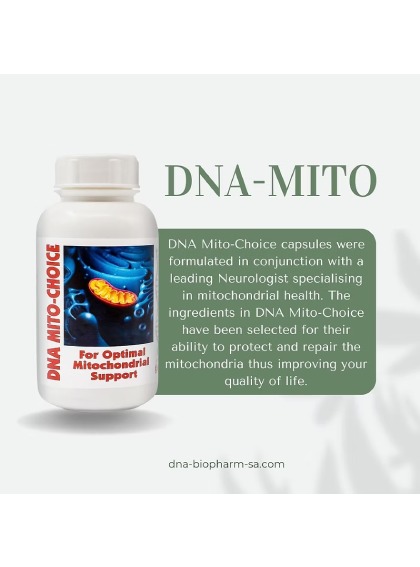
DNA Mito-Choice 600mg x 90’s
DNA Mito-Choice supports healthy mitochondria, helping boost cellular energy, improve vitality, and enhance overall wellness naturally.
How mitochondrial damage adversely affects human health
Blue Light from cellphones and computers
Infrared and near-infrared light from the sun help repair and regenerate the cells which a person cannot get from artificial light sources. Excess blue light creates Reactive Oxygen Species (ROS) and this creates inflammation, even during the day. It also diminishes the function of the mitochondria which leaves the body with less energy to function normally.
Exposure to blue light at night turns off the body’s production of melatonin and this reduces the quality of sleep. Melatonin does more than help with sleep. It is also an antioxidant that protects the brain and increases mitochondrial function.
Lowered melatonin on a chronic basis leads to neurodegeneration and less energy output. This is why people sleep for eight hours and wake up still feeling tired.
Multiple Sclerosis
Known as a neuro-immune disease, patients with multiple sclerosis frequently have impaired ATP synthesis. The lack of ATP is evidence of malfunctioning mitochondria. Also evident in most patients with multiple sclerosis is chronic oxidative stress.
Oxidative stress leads to severe health complications by producing excessive free radicals with a goal to complete demolition work to the structure of cells and inhibit their function. Mitochondria are primary targets of oxidative damage because they are the main sites of cellular respiration which free radicals may be generated in high amounts.
Chronic Fatigue and Fibromyalgia:
Patients with chronic fatigue syndrome (CFS) and fibromyalgia have visibly detectable changes in the structure of the mitochondria. Remember, the mitochondria are composed of different proteins and lipids which contribute to the membranes by which it is made up. The structures of these membranes are highly significant because they help maintain the life cycle of the mitochondria when it grows, splits or combines with another mitochondria.
Also apparent along one of the membranes in the mitochondria is the electron transport chain which is responsible for oxidative phosphorylation which is the process that creates ATP. Seen in CFS and fibromyalgia, the abnormal mitochondria structure results in a decrease in ATP synthesis.
Cancer
Aside from turning the food eaten into energy, the mitochondria also have other radically important functions. For example, they act as the coordinator for apoptosis, or programmed cell death — an important process that ensures the death of malfunctioning cells that might turn into tumors unless they are cleaned out. Over the course of a cell’s life, damage will inevitably occur. Once that damage reaches a certain threshold, signals are sent to the cell with instructions to self-destruct.
The mitochondria determine whether that threshold has been reached, and are the initiators of the subsequent cell suicide program. If the mitochondria are not functioning well, they might not be able to make a proper determination of when the damage threshold has been reached, and/or may not give the damaged cell the signal for apoptosis. The result is obvious: You end up with severely damaged cells hanging around, accumulating and contributing to further dysfunction.
Moreover, in order for the apoptosis cascade to happen, energy input is required. So, even if the mitochondria are able to make the determination that the threshold has been reached and are able to signal apoptosis, if there’s insufficient energy, defective cells will still survive and multiply. This, in a nutshell, is how dysfunctional mitochondria end up causing cancer.
Heart Disease
Heart failure has also been linked to mitochondria dysfunction. As we all know, the heart requires a constant supply of energy in the form of ATP to perform efficiently. Associated with mitochondria related myopathy, the heart is a critical organ that is affected by muscle weakness from defected mitochondria.
Antibiotics
In a recent report appearing in the journal Translational Medicine, researchers revealed that some of the most commonly used antibiotics are actually toxic to mitochondria. Exposure to antibiotics of various types has now been demonstrated to damage mitochondria and at the same time increase the formation of toxic free radicals that can further damage tissue, including protein, fat, and DNA.
| Weight | .350 kg |
|---|---|
| Dimensions | .7 × .7 × .10 cm |


